Podcasts - 14.07.2026 - 18:00
Can a country be rich in resources and poor in prosperity? And why do nations blessed with vast mineral wealth so often struggle to translate it into broad-based development?
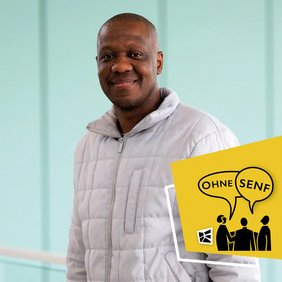
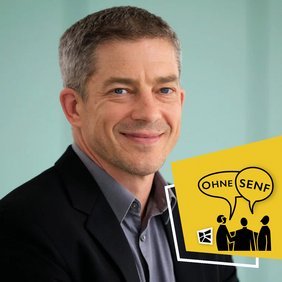
In this episode, Wolfram Eilenberger speaks with Dr. Robby Kapesa, peace and conflict researcher, Early Career Fellow at the St. Gallen Collegium, and expert on natural resource governance in Zambia, about one of the defining challenges of the twenty-first century: who benefits from the global race for critical minerals?
As one of Africa’s largest producers of copper, cobalt, and other strategic resources, Zambia occupies a central place in the global economy. Yet despite decades of extraction and soaring demand, many Zambians continue to experience poverty, environmental degradation, and limited economic opportunities. Kabeza argues that this paradox cannot be explained by the presence of natural resources alone.
At the center of the conversation is the concept of extractivism, an economic model focused on maximizing resource extraction while externalizing environmental, social, and political costs. Kapesa explains how global value chains, multinational corporations, international financial institutions, and domestic political structures have combined to create a system in which immense wealth leaves the country while only a fraction remains behind.
Rejecting simplistic narratives of natural resources as either a blessing or a curse, Kapesa instead focuses on questions of governance, accountability, and fairness. Why do countries rich in minerals often remain heavily indebted? Why do communities living next to mines continue to lack basic infrastructure? And what responsibilities do multinational companies, governments, and international institutions bear in creating more sustainable outcomes?
A recurring theme throughout the discussion is the importance of leadership and integrity. Sustainable extraction, Kapesa insists, is possible, but only if environmental protection, social justice, economic development, and political accountability are treated as equally important pillars of resource governance. Drawing on his extensive fieldwork, Kabeza reflects on the challenges of building trust, amplifying local voices, and transforming research into practical impact.
Ultimately, the episode asks a deceptively simple question: How can resource-rich countries ensure that their wealth benefits the people who live there? In an era of global competition for critical minerals, the answer may shape not only Africa’s future, but the future of the green transition itself.
Dr. Robby Kapesa holds a PhD in Peace and Conflict Studies from the Copperbelt University in Zambia and is affiliated with the Dag Hammarskjöld Institute for Peace and Conflict Studies. As an Early Career Fellow at the St. Gallen Collegium, his research focuses on extractivism, global value chains, natural resource governance, and the political, social, and environmental consequences of mineral extraction in Africa. His work seeks pathways toward more equitable and sustainable resource management in resource-rich countries.
Die News des St. Gallen Collegiums geben Einblicke in die laufenden Aktivitäten, Projekte und öffentlichen Beiträge unserer Fellows. Sie zeigen, wie Forschung über den akademischen Kontext hinaus wirkt und in gesellschaftliche Debatten eingebracht wird.
Ob Medienauftritte, Publikationen oder Veranstaltungen, die Beiträge dokumentieren, wie am Collegium neue Perspektiven auf zentrale Fragen unserer Zeit entstehen und sichtbar werden. Sie machen deutlich, wie wissenschaftliche Arbeit und öffentlicher Diskurs zusammenfinden.